Showing posts with label Book-Buying. Show all posts

11.06.2011

Obama’s Book Shop

Powell's Books, Chicago

“Powell's Books—A Hyde Park institution… Pres. Obama also used to shop here. The shop has a great selection of small press and academic remainder books. You can see the many shelves of books on books, photography, literature, history...”

Looks like my kind of place!

Photo by Andrew Wertheimer. Via Booklover

9.24.2011

Book Sale Haul

I really should not go to book sales, especially good ones. This one was so well-organized that they even had a table for Oprah’s books. I resisted as long as I could but I eventually gave up and just grabbed whatever struck my fancy.

Book sale haul

The highlight of this collection is the pristine Folio Society boxed set of Robert Graves’ “Greek Myths.” Pretty. Also:

  • Empires of the Word: A Language History of the World by Nicholas Ostler
  • 1215: The Year of Magna Carta by Danny Danziger and John Gillingham
  • The Romance of the Rose (new Oxford World’s Classics edition)
  • Fighting in Spain by George Orwell (also new)
  • Middlemarch (older Norton Critical Edition)
  • Living to Tell the Tale by Gabriel García Márquez (autobiography)
  • Tommy Douglas by Thomas H. Mcleod and Ian McLeod (about the father of Canadian health care)
  • The Best of James Herriot
  • I, Rigoberta Menchú: An Indian Woman in Guatemala (autobiography)

Now the problem is where to put them!

8.23.2010

More Franklins

I swung by my favourite thrift store today and much to my surprise found some more Franklin Library books. I thought I had cleaned them out last time but perhaps they had more in storage. This time I got some Greek Tragedies (which I already have but it’s such a pretty book!), Augustine’s Confessions, Montaigne’s essays, Great Expectations (illustrated), The Magic Mountain, and A Farewell to Arms (illustrated). The Hemmingway is the only one that has been read. It looks like it was only partly read but also abused because the binding is racked. I suspect a high school student (it was part of the curriculum when I went through). It still looks good though.

Pretty books

Alas, I didn’t get all the Franklins they had there. I saw a lady walking around with two of them, The Mill on the Floss and The Decameron. I tried to do a trade with her but she was having none of it. I even told her The Mill on the Floss was very sad and she wouldn’t like it but she just laughed and thought I was very funny. Harrumph. Still I can’t complain considering what I got, and for only $1 each this time. I really must shop there more often!

8.06.2010

Latest Thrift Store Haul

I had tremendous luck at the thrift store today. I came home with a box full Franklin Library books, plus a nice edition of Dante.

Franklin Library books

Other than a little dust, the Franklin Library books were in mint condition, with the pages still stuck together by the gilding. I got Aristotle’s Rhetoric and On Poetics, The Canterbury Tales, the poems of John Donne, Crime and Punishment, Faust, the plays of Henrik Ibsen, selected lives of Plutarch, and selected plays of Shakespeare. For them I paid a royal sum of $3 each.

Dante: Hell and Paradise

The Dante is published by Washington Square Press and is not quite as fine as the Franklin books but the paper and printing are very good and the volumes feature some very interesting modern illustrations. The text is presented in Italian and blank verse English translation by Louis Biancolli.

Dante illustration

These books were only $1 each. Alas Purgatorio was missing. Perhaps it is appropriate that I must wait to get my hands on a copy…

4.09.2010

Thrift Store Haul

I went to the thrift store today to get rid of stuff, and ended up bringing home ten pounds of new (to me) books.

The Creative Impulse: An Introduction to the Arts (6th Edition) by Dennis J. Sporre

The Creative Impulse: An Introduction to the Arts

“…an overview of the visual arts, architecture, literature, music, theatre, dance, and film of the Western tradition in the context of the philosophy, religion, aesthetic theory, economics, science, and politics that surrounded them.”

I just saw a documentary on the cover painting, The Art of Painting by Vermeer, so I had to get this book. That’s logical, right? I like the integrated approach and it should be a fun read.

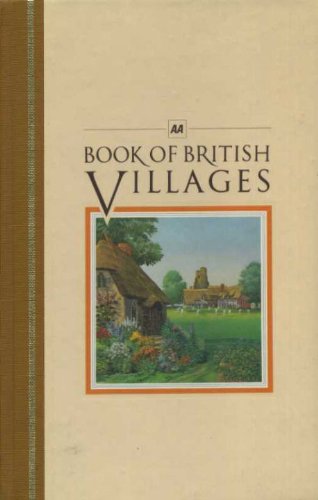
Book of British Villages by AA

Book of British Villages

A sort of encyclopedia of villages with pictures and information about the history and ways of life there. I’m a sucker for anything to do with the English countryside.

Reader's Digest North American Wildlife by Editors of Readers Digest

Reader's Digest North American Wildlife

I love this because it contains everything—ecosystems, plants, fungi, mammals, birds, reptiles, amphibians, fish, molluscs, insects, etc. Every kid should be given one so they can get to know their neighbours.

10.15.2009

Blog Action Day 2009: Climate Change

Blog Action Day 2009 This is my first time participating in Blog Action Day, a global campaign that harnesses the power of blogs to raise awareness about important issues. The topic this year is climate change, something most people are already aware of, but about which much still needs to be done.

Today I heard about the United States’ first “climate refugees,” an entire village that must move because the sea ice that protected their shoreline has melted and storm surges have eroded the shore right to their doorsteps. To make matters worse, the permafrost is also melting, so their homes are gradually sinking into the ground. In fact there are several villages in Alaska that are now in the same situation, and hundreds more that are threatened. Rather ironic for a state dominated by “drill, baby, drill” climate change deniers.

I think that most of us who live in the real world know what climate change is all about. Burning millions of years worth of stored carbon, in the form of fossil fuels, over a couple of centuries has increased the concentration of CO2 in the atmosphere far beyond its natural levels. Carbon dioxide holds in heat from Earth that would otherwise radiate into space, and so the climate is warming, which is causing massive changes, mostly negative ones, in the Earth’s ecosystems.

It is the rate of change that is so devastating to natural systems. Most species can adapt to slow gradual changes, which happen naturally all the time due to the wobble in our planet’s rotation and changes in the intensity of the Sun. It is sudden changes that exceed nature’s capacity to adapt. The dinosaurs, who had survived 160 million years of natural climate variation, were likely wiped out by sudden climate change after a space rock hit the earth. The impact would have filled the sky with dust, shading the sun and slowing plant growth enough for the large herbivores, and their predators, to starve out.

Obviously what is happening now is warming rather than cooling, but the consequences may be no less serious. Tropical rainforests, which contain about 80% of all species, are at risk of drying out and being replaced by species-poor savannahs. This would comparable to the greatest mass extinctions in our planet’s history, with the unique distinction of being wholly caused by a single species.

So what can we do about it? This is a painful question because almost every aspect of our lives is now dependent on fossil fuels. Science and technology make our modern lives possible, but fossil fuels make them happen. If we want to cut back on fossil fuels we either have to cut back our consumption, or how many new consumers we produce, or both. Certainly much can be done by promoting efficiency, but as long as we keep producing more goods, and more kids, any efficiency gains will be swamped by growth just as surely as Arctic coastal villages will be swamped by the sea.

The touchiest subject here is population, but there are ways of dealing with it humanely. Decades of humanitarian work in the developing world has revealed a very simple equation: educating girls and women results in smaller families. It’s already happening, but more can be done by supporting NGOs that work specifically with girls and women in the developing world. I like the Global Fund for Women, but most development agencies have programs aimed at educating girls that you can earmark your donations for.

Westerners already have a low birth rate, but we consume so much more than the world’s poor that having one child here is the same as an Indian woman (theoretically) having over 30 children! Since we are all competing in the same globalized food market, and there are already a billion people malnourished or starving in the world, having children in the West has very real consequences for children elsewhere. Luckily we have the freedom to choose whether or not to have a family, and have many other options for finding fulfillment in our lives.

For us, reducing consumption is critical. The easiest way to do this is to simply buy less stuff. Everything we buy takes fossil fuels to make, transport, and sell, so the less we buy, the less fossil fuels we burn. Putting off purchases, making do, borrowing, or buying used are all ways to reduce our consumption. If you’re worried about the economy, spend your money on human-powered things like live theatre or a weekly massage. Reducing our direct use of fossil fuels is also good, and I think we all know how to do that by now: drive less, fly less, turn off the lights, turn down the heat, etc.

But if you really want to make a difference, and save even more money, become a vegetarian. It may be the single most impactful thing one can do to stop climate change. The production of meat in industrialized countries is not only cruel, it is extremely energy-intensive, consumes large amounts of grains that could be used to feed people, and used and pollutes vast quantities of water. Eating meat is also very unhealthy, and only necessary in places where there is no access to a variety of plant foods (e.g. the far North). So you can stop animal cruelty, save the environment, feed the hungry, stop global warming, live longer, and save money on groceries and health care all in one fell swoop. If you don’t believe me, just Google “vegetarianism and the environment.”

Speaking of Google, did you know that Google has committed to going carbon neutral? I was quite happy to discover that since this blog lives on their servers. Not long ago I asked my previous host, Typepad, if they were doing anything about their climate impact, and I was told that have no plans whatsoever to do anything about it. Meanwhile, Google has enacted a detailed program of increasing server efficiency, using more renewable energy, and buying carbon offsets. Yet another reason to be glad I moved my blog!

Just in case there is anyone still reading, I’d like to plug one organization that is geared specifically at offsetting the carbon footprint of our beloved books. The US alone uses about 30 million trees each year to make books, so it’s not a small issue. While trees are a renewable resource and are theoretically carbon neutral since they fix carbon, that is only true if they harvested sustainably and replanted. I know from working on forestry issues that this doesn’t always happen, even where it is required by law. Climate related drought, fire, and insect infestations make it even more doubtful that all the trees felled to make books will be replaced.

Enter EcoLibris, an American organization that works with partners in the developing world to plant trees that not only take CO2 out of the atmosphere but provide wildlife habitat, restore water flows, and do all the other wonderful things that trees do. The price is quite reasonable, just a dollar to plant a tree to offset one book, with volume discounts if you want to do your whole library at once. Planting trees is one of the best things that can be done for both people and the environment, so it’s hard to go wrong. Ideally, all of our books will be some day be printed on recycled or tree-free paper, but until then it’s nice to have a way to lessen the impact of our favourite pastime.

If you still haven’t had enough climate change talk, check out the Blog Action Day website to see some of the other 10,000 13,000 blogs from 153 155 countries that are blogging about climate change today. If you’ve blogged about it too, do leave me a link!

9.08.2009

Happy International Literacy Day!

International Literacy Day 2009

Each year, International Literacy Day is an occasion for worldwide mobilization for literacy. Today, I call upon governments, intergovernmental organizations, development  partners, employers, trade unions and civil society organizations everywhere to stop the neglect of youth and adult literacy and to strengthen their commitment to literacy. Literacy is not just about reading and writing, it is about self-respect and human dignity and about opportunities that give hope to individuals, families, communities and entire societies. Literacy, an integral part of the right to education, has shown itself time and time again to be a vital tool of empowerment. It is time for the right to education of all persons, of whatever age, to be realized in practice.

—Koïchiro Matsuura, Director-General of UNESCO

I don’t think I have to tell other bookworms about the value of literacy. Reading and writing are not only useful skills, but they bring us great joy and satisfaction in life. I don’t think we can imagine what it’s like to be one of the three quarters of a billion adults in the world without basic literacy skills. Not only are they deprived of the joys of reading, they are shut out from the means to improve their lives, exercise their rights, and participate in their societies. As a result they are liable to life-long poverty, exploitation, and a terrible sense of helplessness.

There is much that we can do to remedy the situation. One of the most obvious is to support literacy charities operating domestically and internationally. I have a few of my favourites featured in the footer of this blog, but there are many others. I would suggest using a reputable donation portal like Canada Helps or Charity Navigator (USA) to search for literacy programs.

You can also help every time you shop for books online by using the new Bibliotarian website. At Bibliotarian you can comparison shop for new and used books, and when you make your purchase the relevant affiliate fees are sent to charity. Half goes to the Book Wish Foundation, which runs Bibliotarian and supports literacy programs for Darfur refugees in Chad, and the other half goes to the (U.S.) charity of your choice. It’s a great way to give the gift of literacy while you are enjoying your own literacy.

“Once you learn to read, you will be forever free.”

—Frederick Douglass

2.28.2009

Bibliophiles: "Like a swarm of locusts"

This was the scene at a warehouse in Bristol, England. Apparently, the previous tenant, a discount bookseller, left behind a few gazillion of its books and the management figured the best way to clear their building was to invite the public to come and take what they wanted. They didn’t have to ask twice! According to the Daily Mail, thousands of bibliophiles showed up and have been taking books away by the carload. It’s not a very pretty sight, but it’s better than sending them straight to the recycler. At least this way they have a chance at another life.

See more photos and the story at the Daily Mail.

via Book Patrol

10.05.2008

Oxford World's Classics: New Look, Same Oxford Quality

I have been a fan of Oxford World's Classics, both hardcover and paperback, for some time, but lately they have been hard to find, especially in Canada. This is a shame because I find that OWCs have much better editorial content than their main rival, Penguin Classics, and are also better made (full comparison here). So, I was quite pleased when Oxford University Press announced that it would be re-issuing its Oxford World's Classics series with a new look. The good people at OUP recently sent me a few samples to look at, and I'm pleased to report that they continue to maintain the high Oxford standard.

Just having the series in print again would have been good enough for me, but the new cover design really is more aesthetically pleasing, and the books seem to be better made than their predecessors. The covers have a matte finish with beautiful, relevant artwork and a clean, white band for the title text. The spines are white with the familiar OWC red band and a small detail from the cover art at the top. The binding feels more supple and secure than older editions, though that may have something to do with their youth. The paper also feels smoother and stronger than it used to be.

I have only perused the texts and am no expert on them so my comments relate mainly to the editorial materials. These vary depending on the text, so I will treat each one individually just to give you a taste of the different possibilities. I appreciate that Oxford does not take a cookie-cutter approach to its classics, but tailors each edition individually.

Oxford World's Classics: The Bible (KJV)
Let's start with what might be the largest OWC, The Bible: Authorized King James Version with Apocrypha. It is a full two and a quarter inches thick, and has an extra thick binding to hold it all together. Unlike the other books in this series the paper is bright white and thin, though not as thin as typical bible paper. This makes for excellent reading with no bleed-through, unlike many (if not most) more expensive bibles. The editors have provided a long (36 pp.) introduction, bibliography, short glossary, good maps, and 120 pages of explanatory notes covering each section and book of the Bible. The editorial approach is historical-critical, and the editors present the Bible as "the basic book of our civilization," and the KJV in particular as "a classic book of English literature." It would make an excellent edition for someone who wants to read the King James Bible for its impact on English literature and culture.

Oxford World's Classics: Classical Literary Criticism
At the other end of the size scale is Classical Literary Criticism, a thin volume which collects writings on literature by Plato, Aristotle, Horace, and others. The muted cover art is Rembrandt's Aristotle with a bust of Homer; very appropriate. After the short general introduction the texts are presented bare. There are introductions to each text in the endnotes, but these are quite brief, with the exception of Aristotle's Poetics, which gets a more thorough treatment. An index of proper names, with dates and field of work, finishes off this spare volume. Evidently the editors felt that the classics speak for themselves.

Oxford World's Classics: The Qur'an
I was somewhat disappointed with the Oxford World's Classics edition of the Qur'an. Though the editor and translator is a scholar, the introduction has an apologist slant, and sometimes seems to present religious doctrine as fact. This is not what I would expect from Oxford, but I suppose it is a sign of the times. It is now nearly impossible to publicly comment on the Qur'an in any other way without being subjected to threats and acts of violence. The unfortunate consequence of this is that the translation is suspect. Some verses do indeed appear to be softened: "Men are the managers of the affairs of women" in Arberry becomes "Husbands should take good care of their wives" in this edition. Other contentious verses have more conventional translations, sometimes with footnotes suggesting how to interpret them. The language is formal, modern English, which may not exactly reflect the exalted, archaic language of the original, but it helps to make the meaning clear. The book also includes a bibliography, chronology, map, index, and footnotes. It would be a good edition for someone who wants an easy-to-read edition of this important book. Just keep in mind that it may be a somewhat softer interpretation of the text than others.

Oxford World's Classics: The Canterbury TalesThe Canterbury Tales is a re-issue of the 1985 edition, and it looks as though it hasn't been reset since then. The typeface is more slender and sharp than what Oxford usually uses these days, and it is a bit wobbly but I find it charming. The translation is in verse, and the translator writes that when necessary he sacrificed rhyme in order to preserve the plain speech of the original. The book also includes a bibliography, chronology, and endnotes. Here's an amusing little taste from the Prologue to the Oxford Scholar's Tale:

'Let's have some jolly tale of adventure,
And keep your flowers of rhetoric in store,
Your figures of speech and so forth, to give wings
To the high-flown language that men keep for kings.
Just for once speak in simple terms, we pray,
So we can understand the things you say.'

Oxford World's Classics: Paradise Lost
Last is Milton's Paradise Lost, which gets my enthusiastic approval for having footnotes! This edition is from 2004, as is the Qur'an, which also has footnotes, so perhaps this is the new standard for Oxford. The system of indicating notes is one I haven't seen before and I like it very much. Any line with a note has the line number printed in roman type in the margin, while regular line numbers are italicized. The notes are then listed by line number at the bottom of the page. I think this makes for smoother reading than if asterisks or other signs were used within the line. Listing the notes by line number also makes it very easy to jump back to the line you were reading. The book also features a thorough introduction, note on the text, bibliography, and chronology.

I hope this gives you a sense of what the Oxford World's Classics series has to offer the serious reader. I should add that the prices of these books are very reasonable and comparable to the Penguin Classics for what I consider to be a better product. I plan to stock up while they are available, replacing some of my worn out paperbacks and filling in some of the gaps in my library. Although I generally don't pay much attention to how books look, I won't deny that the idea of having a whole host of matching white spines on my shelves is rather attractive. Let the shopping begin!

8.01.2008

Amazon Acquires Abe

SEATTLE & VICTORIA, British Columbia--(BUSINESS WIRE)--Aug. 1, 2008--Amazon.com, Inc. (NASDAQ:AMZN), today announced that, subject to closing conditions, it has reached an agreement to acquire AbeBooks. AbeBooks is an online marketplace for books, with over 110 million primarily used, rare and out-of-print books listed for sale by thousands of independent booksellers from around the world.

"As a leader in rare and hard-to-find books, AbeBooks brings added breadth and expanded selection to our customers worldwide," said Russell Grandinetti, vice president of books for Amazon.com. "AbeBooks provides a wide range of services to both sellers and customers, and we look forward to working with them to further grow their business. We're excited to present all of our customers with the widest selection of books available any place on Earth."

"This deal brings together book sellers and book lovers from around the world, and offers both types of customers a great experience," said Hannes Blum, chief executive officer of AbeBooks. "We are very excited to be joining the Amazon family."

The acquisition is subject to customary closing conditions, including regulatory approvals, and is expected to close before the end of the fourth quarter of 2008.

AbeBooks will continue to function as a stand-alone operation based in Victoria, British Columbia. AbeBooks will maintain all of its websites, including its Canadian website with Canada-specific content, such as reviews of Canadian-authored books and interviews of Canadian writers.

[press release]

Thoughts? I like AbeBooks because they are local and were the pioneers of online used book selling, but their website doesn't have the detailed product information and general slickness I've gotten used to with Amazon. Perhaps that will change now. The main downside I see is that one good earthquake could knock out the entire system in one blow! Not that I'd care since I live on the same subduction zone and would have my own technical difficulties to worry about in that event...

Subduction

UPDATE: Book Patrol has some thoughts on this, uh, "seismic event."

3.27.2008

My Kind of Rewards

These days it seems that every retailer has some sort of rewards program. I find them offensive because what it really means is that if you don't hand over your personal information and cram yet another plastic card in your bursting wallet, you will have to pay more for everything in the store. I tend to avoid these programs as a matter of principle, but one I don't mind subscribing to is Amazon Associates.

Danielle recently asked about advertising on blogs in general and Amazon Associates in particular. I have to say that I am a big fan of the system. It's quite a flexible program; it can be as unobtrusive as adding your ID to each Amazon link you post or as flashy as an animated banner. You can link to specific items, showcase bestsellers, or just provide a search box. In return, you get real dollars and cents (not mysterious point counts) for clicks and for purchases made after clicking on your link. Best of all: there's no card!

I choose to receive my "earnings" as Amazon e-mail gift certificates, which don't last long before they are converted into books. My latest box of free books contained two very enticing items, Henri-Jean Martin's The History and Power of Writing, and Sam Savage's Firmin: Adventures of a Metropolitan Lowlife. Not bad for just posting links I would put up anyway.

I am now toying with creating an "aStore" to feature the books that form the core of my literary library. It will be very much the same as what I have on LibraryThing, and the referral feels will come to me instead of LibraryThing. I don't know if anyone will be interested in it—it may be too blatently commercial. Time will tell if it's worth the trouble.

The goal of all this is just to make the blog pay for itself. I'm not about to retire on these meagre earnings, but it helps me justify staying with Typepad and enjoying all its bells and whistles. I definitely encourage any book bloggers to take advantage of this if they want to make their blog pay for itself or just have a few extra books to blog about. If you're already linking to Amazon, why not get rewarded for it?

2.09.2008

Bible Bleedthrough: A Rant

Everyone knows that the Bible is the best-selling book of all time. It's also the best-selling book every year, even though almost every family (at least in the U.S.) already has a copy. The thing is, one just isn't enough. The average American household has four Bibles in it. I have eight, including a bilingual edition and a parallel edition containing four English translations, not to mention a parallel Gospels and lectionary. And I have barely scratched the surface. The variety of Bibles out there is truly mindboggling, and readers are happy to buy about a hundred million of them every year. So why is it so hard for publishers to print a Bible that is pleasant to read?

My translation of choice is the New Revised Standard Version (NRSV), which is considered by many to be the most reliable translation into English to date. It's been around for nearly 20 years now, but I have yet to see an edition of it that doesn't make my eyes cringe. Sometimes the typography is the problem, but mostly it's the paper, that flimsy, transparent, dreadful Bible paper. Why is it that publishers think that it's all right to print such an important book on paper so thin you can read what's on the next page before you get there? As if reading the Bible wasn't challenging enough, the jumble of shadows behind each line just confuses the eye and the brain. No one would dream of publishing even the cheeziest paperback novel on such rotten paper, so why is it OK for the most important book in all of human history?

The latest entrants into the Bible Bleedthrough Hall of Shame are the new Harper NRSV Bibles. They are being marketed as quality, readable Bibles, and indeed they are beautifully constructed and designed, but it is all for naught because the paper is a complete disaster. I've examined both the standard, one-column edition and the large print edition, and in both cases the paper is the worst I've ever seen. Have a look:

Harper Large Print NRSV

Now, I don't mind a bit of bleedthrough in a study or reference Bible. Or perhaps I should say, I put up with it to keep the size and cost down, and because it's not the sort of thing one usually reads for long stretches. But a reading Bible, one containing only the text, should be held to a higher standard. An edition like that is likely to be read for inspiration or solace, and that is not a time when you want to have to work just to make out the words. A reading Bible should be beautiful, and it should be conducive to meditation and reflection. Reading it should be a peaceful experience. It shouldn't give you a headache.

Of course it's not just the Harper Bibles. As I said, I have yet to see any edition that lived up to it's promise of "opaque" paper (they all say that, and they all lie). I wonder if any of the publishers actually read their product? I wonder if they are just churning out any old junk because they know people will buy it? Well, I'm not buying it. I'm returning my Harper Bible, and I'm going to wait for something better. In the mean time I have my Saint John's Bible. At 15 inches tall it's not the most convenient book to read, but it can't be beat for beauty. Publishers might want to take note of this—if people are willing to spend $300 for a big, beautiful, 7-volume, handwritten NRSV Bible, we might be willing to spend $50 on a well-designed, one-volume print edition on truly opaque paper. I'll certainly be the first in line for it.

9.29.2007

Book Rich, Cash Poor

Many thanks to the Northwoods Contemplative for sending me this great quote.

The fidelity of Benedictines to the practice of reading has been of great service to mankind.  It had been to secure suitable reading materials for the monks that monastic libraries were established and the skills of literacy preserved.  Although Benedict did not envisage his monks as custodians of culture...nevertheless the devotion to reading which he infused into his followers was sufficiently strong to ensure that much was accomplished in securing the accumulated wisdom of the Greco-Roman World and of western Christianity from the erosion which accompanied the collapse of the western Roman Empire.

Nor should the communal sacrifice demanded by such fidelity be underestimated.  The buiding up of even a small library was an expensive project and the copying of manuscripts kept many workers away from more lucrative employments.  When we consider that Clairvaux, during the forty years of Bernard's abbacy, acquired several hundred tomes, only some of which were gifts, we can form some idea of how many hours some of his monks spent at scriptorium tasks.  To provide a library, an educational system and scope for personal reading demands the outlay of considerable resources and the corresponding acceptance of a lower standard of living and less capital-based influence than would otherwise have been possible.  Dedication to reading is a guaranteed means of staying poor!

—Michael Casey, An Undivided Heart: The Western Monastic Approach to Contemplation

9.20.2007

Library Sale Cart Find Du Jour

Sure, I already have a copy of Gilgamesh, but for one dollar I could hardly say no to a brand new, unmarked copy of Stephen Mitchell's popular translation. It's always good to get a second opinion, right?

8.31.2007

Thank You, Shoppers!!

Thanks to everyone who has clicked on one of my Amazon.com product links and gone on to buy something. It's taken over a year, but the nickels and dimes I've made off each purchase have added up. A big 'thank you' goes to whoever bought the Xbox 360—that actually accounts for more than half of my kickbacks.

The Smithsonian Book of Books by Michael OlmertSo what have I done with my micro-windfall? Bought a book, of course! The Smithsonian Book of Books by Michael Olmert. It promises over 300 pages of gorgeous illustrations of books through the ages. I can't wait.

I must say it was interesting to peruse what people bought after clicking through my site. Don't worry, there's no way to identify you, not even a date. But who's the Frampton fan? Was Semantics in Generative Grammar a page-turner? And who's been playing Brahms Sonatas? Well, whoever you are, thank you!

8.22.2007

Library Sale Cart Gem of the Day

California: A History by Kevin StarrIt's this sort of find that keeps me sifting through the thrillers, travel books, and old computer manuals on the library's sale cart: a completely unmarked, gently read copy of California: A History by "legendary California historian," Kevin Starr. It's part of the Modern Library Chronicles series, and you know how I like Modern Library hardcovers (large print, opaque paper, good price—in this case, $1.50!). I'm half-Californian (if I can put it that way) so I have a particular interest in that state. I'm actually surprised that such a giant of a state can be contained in such a small book (370 pages). I expect it will be a mad, magnificent rush through 500 years of influential history.

8.18.2007

What Do Don Quixote, Anna Karenina, and The Odyssey Have in Common?

Not only are they great classics, but recent translations of these works have been wildly popular. Sarah's (Loose Baggy Monster) recent mention of the newest translation of War and Peace, due out in October, got me thinking and googling about translations. I found this interesting 2006 article about the business of translations of classic literature. Here are some snippets:

In January, Viking released a version of Leo Tolstoy's "War and Peace," the first new English translation in nearly 40 years of the sprawling Russian saga about the Napoleonic Wars. A blurb on the back jacket of the 1,412-page volume, translated by Anthony Briggs, calls it "the best translation so far of Tolstoy's masterpiece into English."

In fall 2007, Everyman's Library is coming out with its own "War and Peace," translated by husband-and-wife team Richard Pevear and Larissa Volokhonsky. "It will be our most important new translation of the year," says LuAnn Walther, the imprint's editorial director.

Although the best-seller list is currently dominated by writers like James Patterson, Dean Koontz and Nora Roberts, one surprising corner of the publishing business is thriving: new translations of old classics. This month, Viking will publish a fresh version of Alexandre Dumas's "The Three Musketeers," followed by Virgil's "The Aeneid" three months later. In October, Yale University Press is releasing its take on Plato's "The Republic." Next year, readers will see updated works by Albert Camus and Franz Kafka, as well as Sun Tzu's "The Art of War."

Classics make up a small segment of the $25.1 billion U.S. publishing market, but they have the potential to turn into breakout hits. Demand soared for the 2001 translation of Tolstoy's "Anna Karenina," by Mr. Pevear and Ms. Volokhonsky, after Oprah Winfrey chose it for her book club in 2004; publisher Viking Penguin has sold more than 635,000 copies since its release in paperback. In comparison, many current novels sell fewer than 5,000 copies total.

...

When blessed with golden reviews, the classics can become miniblockbusters. In 1990, Viking Penguin brought out Robert Fagles's translation of Homer's "The Iliad," followed by "The Odyssey" in 1996. Both were highly praised and have now sold an estimated 1.5 million copies. The publisher has high hopes for Mr. Fagles's next project, "The Aeneid."...

Well, we all know how The Aeneid went over. (Who didn't buy a copy last year?)

Of the 172,000 new titles published last year in the U.S., industry experts estimate that fewer than 1,000 were literary works in translation. A new translation is not likely to hit the sales level of Dan Brown's 2003 best-seller "The Da Vinci Code," which has nearly 20 million copies in print in the U.S. -- but a successful edition can generate sales for 30 years or more, especially to the lucrative high school and college markets. And with the exception of modern classics, publishers don't need to pay author royalties, which adds to potential profits and the attractiveness of the niche. Publishers have traditionally paid only a flat fee to translators, but today, some star translators receive royalties as well.

...

One issue is whether literature becomes more accessible when it reflects the current rhythm and style of language. "The English language changes so rapidly that some words become archaic and get in the way of readers," says Michael Scammell, a professor of writing and translation at Columbia University in New York. He says he looks at translation as a musical performance: Just as there are many versions of Beethoven's Ninth Symphony, translators may have their own interpretations of the words on the page.

...

The growing selection can result in extra homework for readers. Jeff Rubin, a writer and lecturer in Oberlin, Ohio, recently passed up the latest "War and Peace" and instead chose Rosemary Edmonds's translation, a Penguin Classics edition last revised in 1978. 

...

Yet the most ambitious efforts can fall short. In May 2005, Everyman's Library published Mr. Woods's new translation of "Joseph and His Brothers" by Thomas Mann. The $42 volume, at 1,492 pages, was the biggest book ever published by the imprint. To date, sales are estimated at about 5,000 copies. Ms. Walther, the editorial director, says she is not discouraged. "When you publish classics, you are in it for the long haul," she says.

—Jeffrey A. Trachtenberg, "Flood of re-translated classics hits shelves"

5.31.2007

Wisdom of the Wishlist

I noticed something extraordinary on my Amazon Wishlist today. The Norton Anthology of English Literature, 8th edition hardcover, has dropped in price from $88.31 to $57.44 per volume. That's a drop of 35%, which brings the hardcover to within $5 of the paperback. Wow.

What happened? This anthology has been on my wishlist since before it was released in Canada, but I've been reluctant to buy it because of the price. I can't remember if it was discounted before, but it certainly is now, though no discount is indicated on the website. The price in the US is only discounted 12%, so this is strictly a Canadian phenomenon. [Correction: I was looking at the wrong edition; the US price is similarlydiscounted.] Perhaps a new printing or revised edition is on its way, though there is no indication of it on Norton's site.

Who can divine the secrets of Amazon? The main reason I noticed this is because when I add something to my Wishlist, I note down the price at that time in the "notes" box. That way I can track changes in the price over time. More often than not the price goes down, often marginally but sometimes substantially, as in this case. This is in contrast to the tendency of books left in a shopping cart to increase in price over time.

There is a danger to leaving things on your wishlist too long, though. I've seen things go out of print amazingly quickly, leaving me at the mercy of what can only be described as scalpers—Amazon Marketplace merchants who jack up the price of recently out-of-print items. One paperback book on my wishlist, the original price of which I neglected to write down but which couldn't have been over $35, is now going for $170. Ridiculous.

So I guess the wisdom of the wishlist is to stay vigilant. Note down prices, and keep an eye on changes in availability, which is probably the best advance warning that something is about to go out of print. Does anyone else have any wishlist wisdom to share?

4.17.2007

Gabo and Cervantes: ¡Que Lindos!

Gabo and Cervantes

I finally got my Real Academia Española anniversary editions of Don Quijote de la Mancha andCien Años de Soledad. What beautiful books! As a person who finds dustjackets troublesome I like the glossy printed covers. Both books have ribbon markers, as well as essays and glossaries to support the texts. Cien Años has the usual genealogy but also a glossary of characters—I've read far enough into the book before to know how handy that will be. Don Quijote has footnotes (Viva footnotes! Death to endnotes!) and beautiful decorations in the introductory section. I especially love how the last few lines of each section taper towards the final flourish. Why don't publishers do this sort of thing more often? It's details like this that make a book special.

Don Quijote

Don Quijote